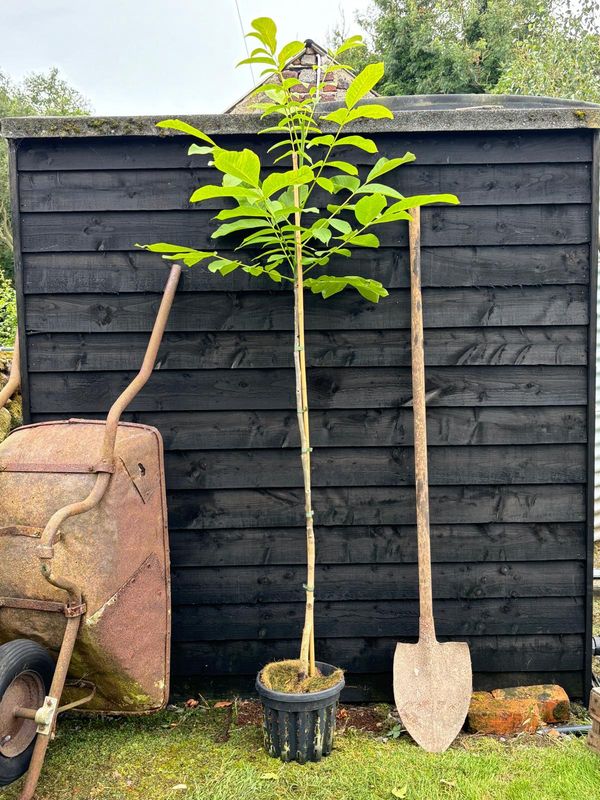
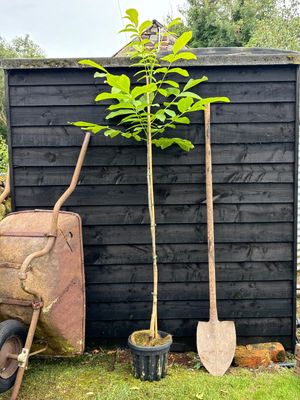
About This Tree
Juglans regia, commonly known as the English walnut or Persian walnut, is a majestic and valuable deciduous tree that belongs to the Juglandaceae family. This tree is renowned for its large, spreading canopy and its production of high-quality nuts. When fully mature, Juglans regia can reach an impressive height of around 25 to 35 meters, with a similar spread of about 20 to 25 meters, making it a substantial presence in any landscape.
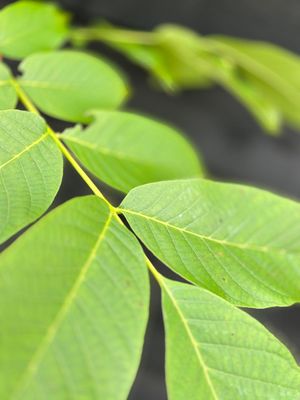
One of the key features of the English walnut is its pinnate leaves, which can grow up to 40 centimetres long, comprising 5 to 9 leaflets with a slightly serrated margin. In spring, the tree produces inconspicuous greenish flowers, which are wind-pollinated. By autumn, these flowers develop into the familiar, corrugated-shelled walnuts, encased in a green husk that eventually splits to reveal the mature nut.
Juglans regia thrives best in deep, well-drained loamy soils, and it prefers locations with full sun exposure. While it can tolerate a range of soil types, it does not perform well in waterlogged or excessively acidic conditions. This tree is relatively drought-tolerant once established but benefits from regular watering during its early years. Notably, the English walnut is also allelopathic, meaning it releases chemicals into the soil that can inhibit the growth of certain other plants nearby, a feature that gardeners should consider when planning companion planting.